If your annual turnover is up to ₹5 crore, print a 4-digit HSN code on B2B invoices. Above ₹5 crore, print a 6-digit HSN code on all invoices.
What is an HSN code?
HSN (Harmonised System of Nomenclature) is the code that classifies goods for GST. Services use a SAC code instead. The code decides the GST rate for the item.
How many digits do you need?
| Annual turnover | Digits | On which invoices |
|---|---|---|
| Up to ₹5 crore | 4 | B2B invoices (optional on B2C) |
| Above ₹5 crore | 6 | All invoices |
Examples
- Rice: 1006
- Edible oils: 1507–1515
- Soap: 3401
- Mobile phones: 8517
Search your item on the CBIC GST rate finder (cbic-gst.gov.in) to get the right code and rate.
HSN in Billman
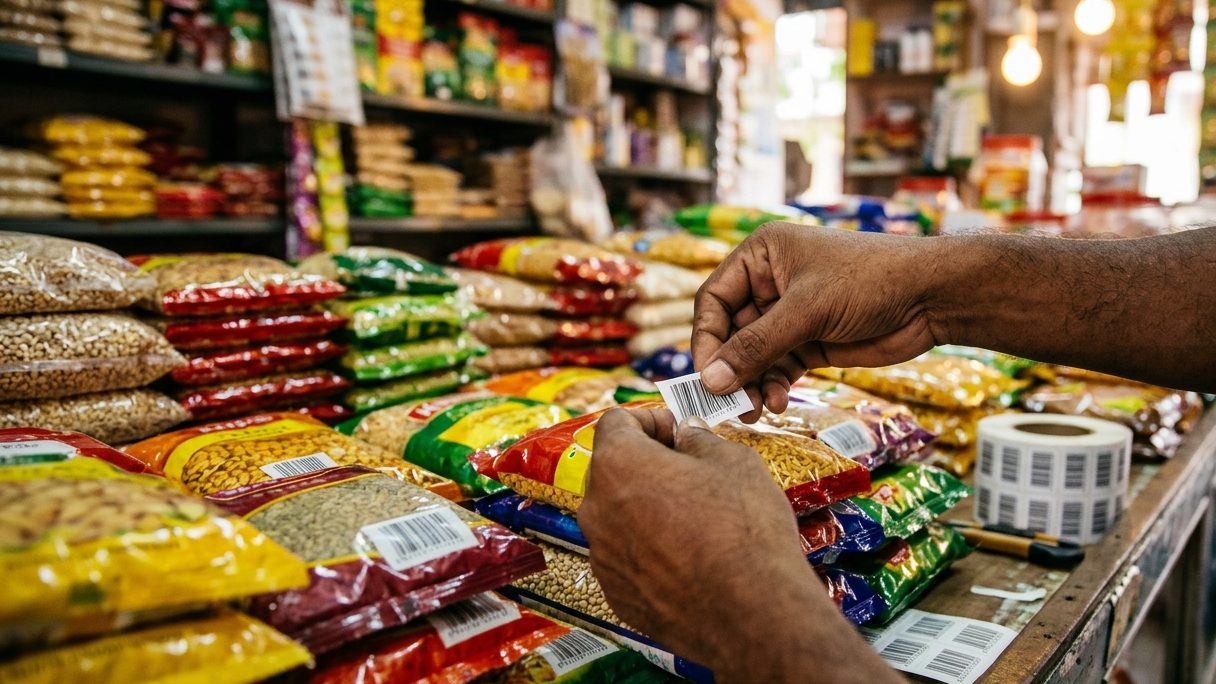
Save the HSN code once on each product. Billman prints it on every invoice, builds the HSN summary for GSTR-1 and warns you when a code is missing.
 ▶Watch: add & import products with HSNBulk import, edit and print labels — 2:18✨In BillmanHSN codes saved on every productSee how it works →
FAQ
Is HSN mandatory on B2C invoices?
Up to ₹5 crore turnover it is optional on B2C invoices; above ₹5 crore, a 6-digit HSN is needed on all invoices.
What is the difference between HSN and SAC?
HSN classifies goods; SAC classifies services.
Never miss an HSN code again
7 days free. We set it up and move your data — free.